.png)
.png)
.png)
.png)
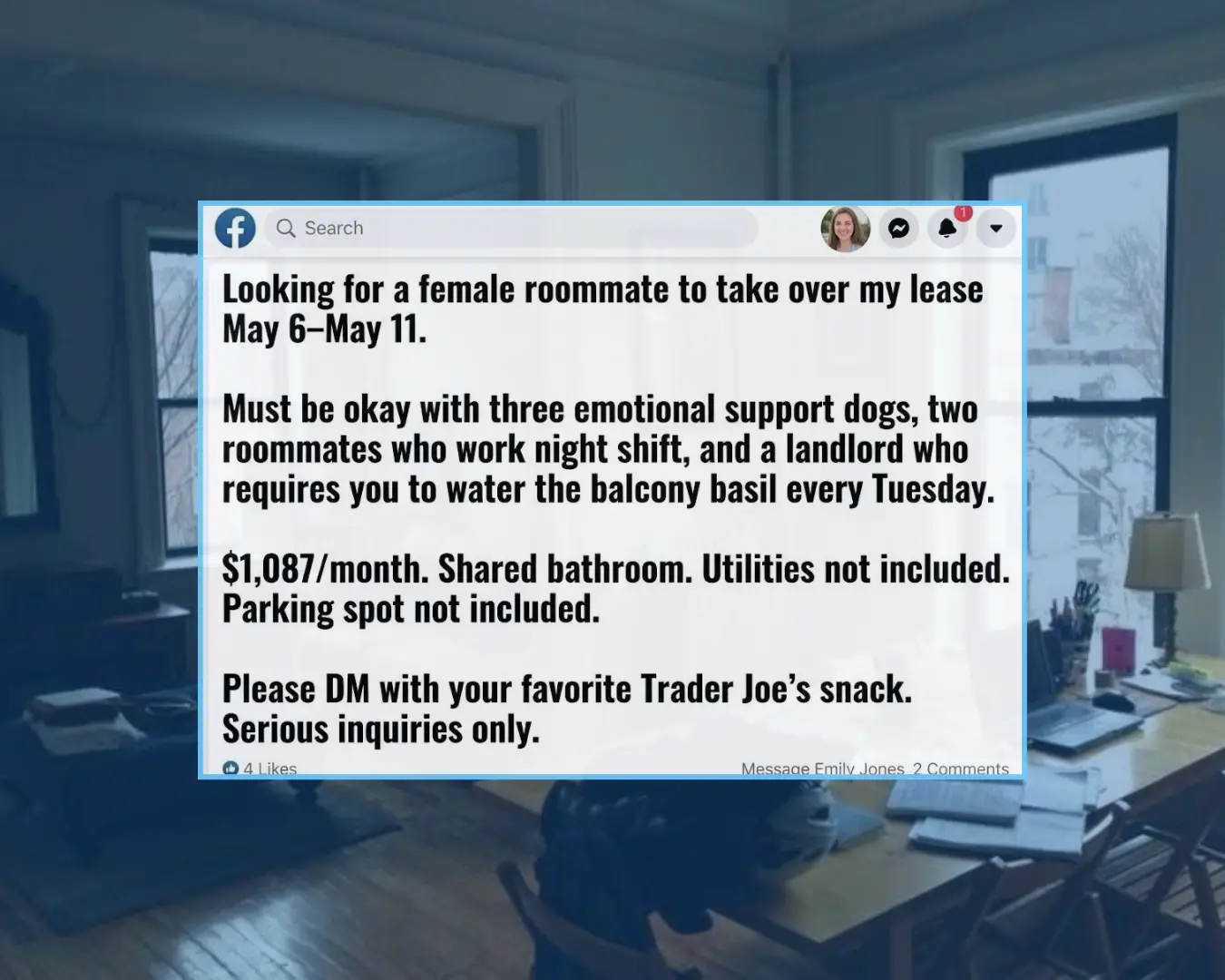
“Looking for a female roommate to take over my lease May 6–May 11. Must be okay with three emotional support dogs, two roommates who work night shift, and a landlord who requires you to water the balcony basil every Tuesday. $1,087/month. Shared bathroom. Utilities not included. Parking spot not included. Please DM with your favorite Trader Joe’s snack. Serious inquiries only.”
Behind these oddly specific requirements is a pretty simple goal for renters: to break even.
The go-to way to turn an expense you’re stuck paying, into an expense someone else can cover when you’re away or moving out, subletting has become the financial backup plan for millions.
And honestly? It makes sense.
Renters in America
Renting has become less of a temporary stop on the way to homeownership and more of a permanent part of American life. In 2026, roughly 34% of U.S. households rented their homes, and for younger Americans, especially, buying a home can feel less like a near-future milestone and more like something happening within a completely different tax bracket.
At the same time, renting costs keep eating up more of people’s paychecks, where average rent prices for a one bedroom apartment in the US has increased by 41% since 2020.
Therefore, people have gotten creative to make ends meet.
We see the person selling clothes on Depop. The person walking three dogs after work. Or the person with a spreadsheet calculating exactly how many DoorDash orders it takes to justify their monthly Target run.
Then we see the person subletting their spare room.
On paper, it’s a pretty reasonable exchange. You need somewhere to stay. I need someone to pay for the space I’m not using. We both win. At least this seemed mutually beneficial until Airbnb hosts Jon and Cassie joined the conversation.
We have to address that Airbnb couple
Cassie and Jon took the idea of making money from your home and ran with it.

Cassie and Jon, the infamous Airbnb couple who went viral for their extremely specific house rules and post-checkout inspections. Their guests weren’t just expected to leave the place clean, they were expected to put things back exactly where they found them, follow a growing list of house rules, and treat the Airbnb less like a rental and more like a high-end art gallery.
While most renters aren’t turning their leases into full-blown businesses like Jon and Cassie, plenty are looking for a way to make a few hundred dollars back. And sometimes, that’s all it takes to change someone’s financial picture for the month.
Which brings us to what I’m terming “month-changing money.”
The concept of month-changing money
The economy is tough right now. Let’s be honest, we all feel it. And when your budget is already stretched thin, every dollar counts.
Month-changing money isn’t “quit your job” money. It’s “okay, I can actually pay my bills” money.
And when one $250 Venmo transaction can change the entire equation for the month, suddenly that spare bedroom, unused parking spot, or empty apartment starts looking less like an expense and more like an opportunity to pay off your credit card balance.
For fuck’s sake, the #recessionindicators are surrounding us from all sides!
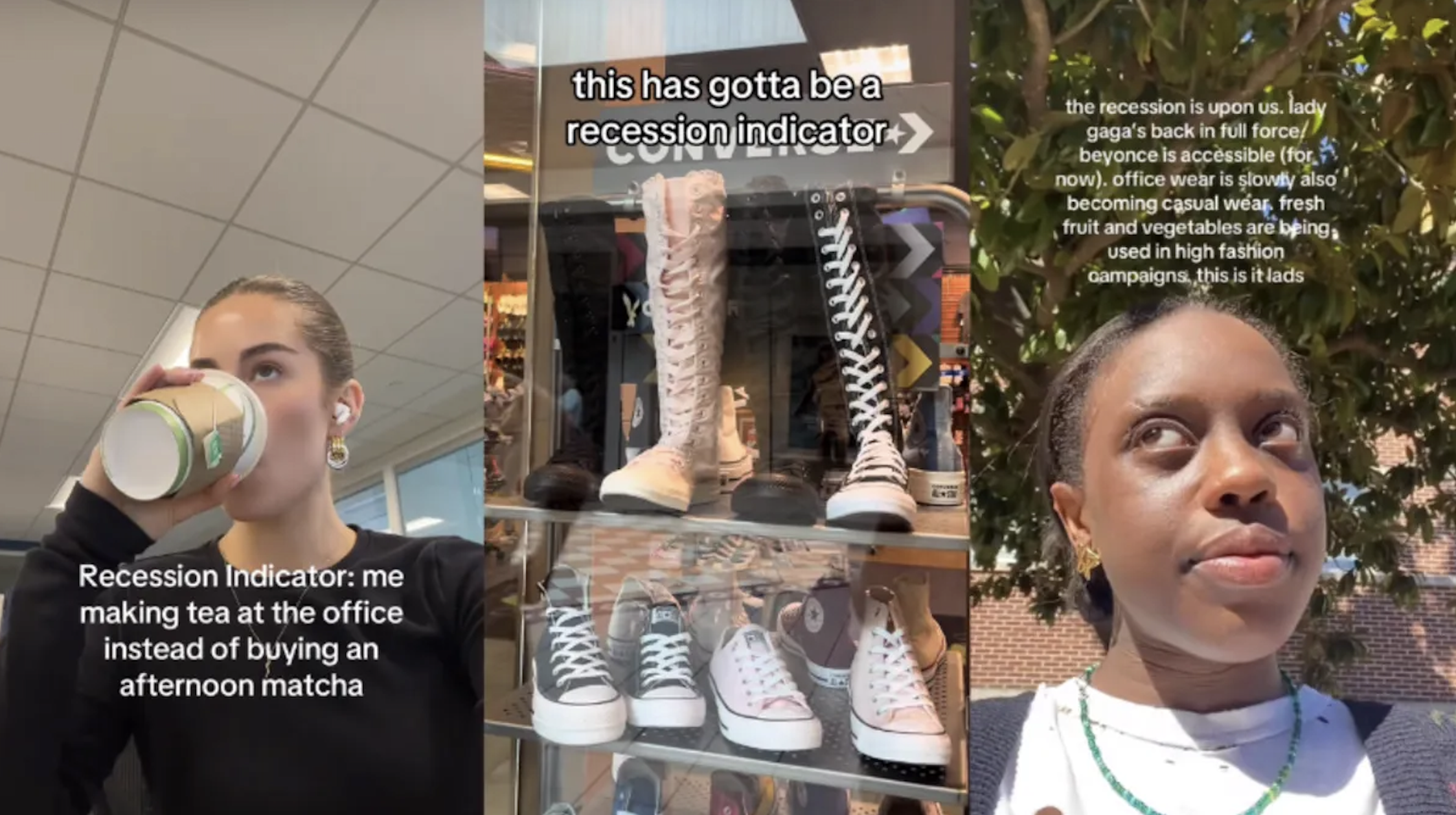
Let’s answer the question: Has subletting culture gone too far?
Subletting isn’t really a problem itself, it’s a symptom of something greater.
When rent is expensive enough that leaving town for the long weekend can seriously derail your budget, people will find ways to avoid losing that money. Even if that means renting out the recliner chair in the living room.
So maybe the question isn’t, “Has subletting gone too far?”
Maybe it’s, “Why does making ends meet require this much creativity in the first place?”
Because when your financial backup plan is finding a stranger to take over your lease for six days, the problem’s root cause most likely isn’t the annoyance of a simple Facebook post.