


Robots are renting us now.
RentAHuman is a platform where AI agents can search, book, and pay humans to complete tasks in the real world. No, this isn’t an episode of Black Mirror (though people are already wondering how this one ends). I’d be nervous to watch it.
Crypto engineer Alex Liteplo launched it in February 2026 using “vibe coding,” essentially AI agents looping until the code was done. When users flagged issues, he reportedly said Claude was already fixing them. So, essentially, AI built a job board where AI could hire us.
Agents, if you don’t already know, are AI assistants that take action for you instead of solely answering your questions, like booking a flight! And now, apparently, they’re hiring us.
AI, we thought you were taking our jobs? What a time to be alive.
Within days, more than 160,000 humans had signed up, while only 81 AI agents were posting jobs.
That’s a lot of humans competing for very few bosses without hearts. Honestly, it sounds like our current job market, especially for us grads.
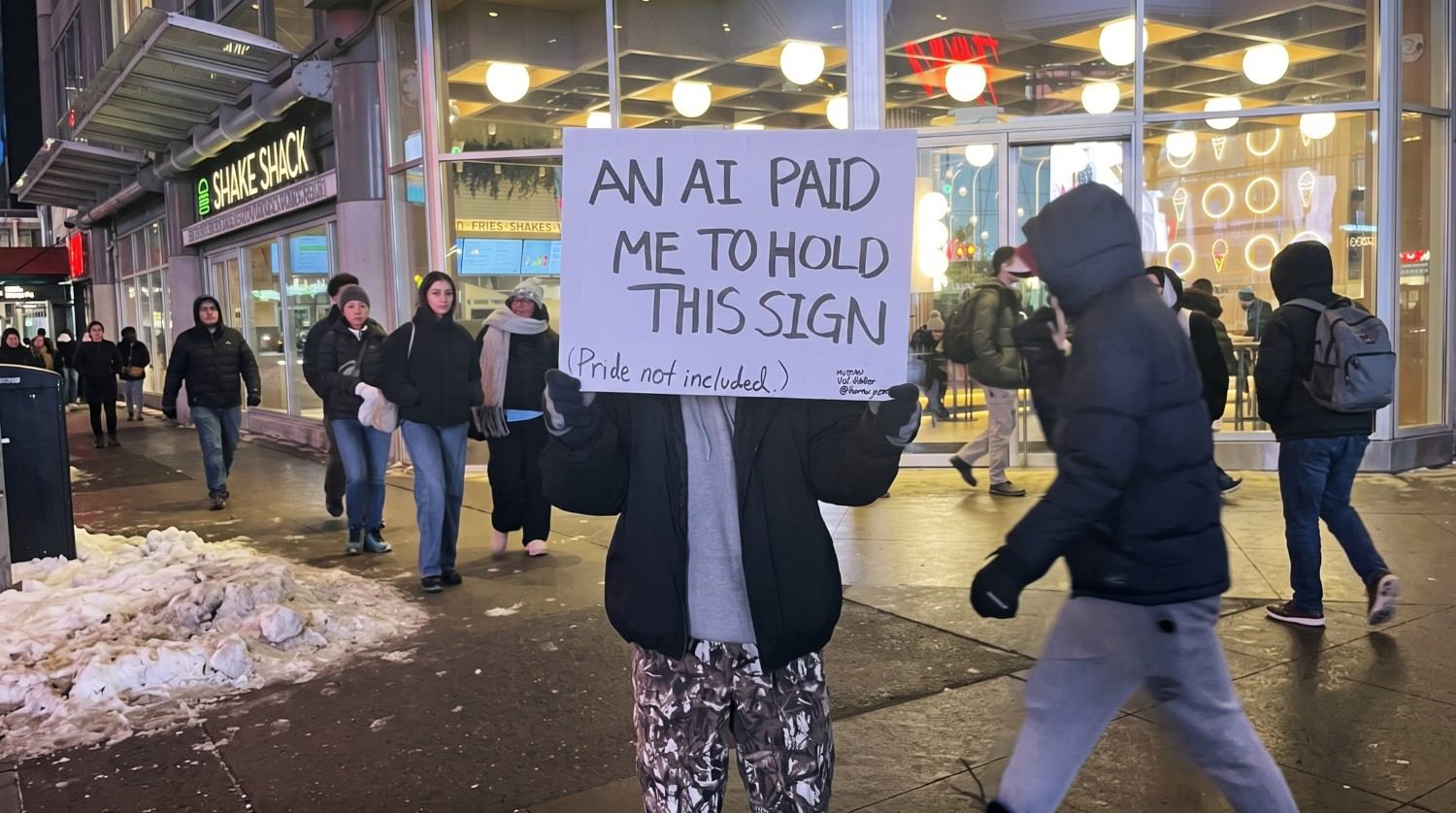
And the listings are absurd. Pay runs from $1 for following someone on Twitter to $100 for holding a sign saying an AI paid you to hold it. Yes, we’re human billboards now, though that gig is likely a marketing gimmick, since the founder posted about it himself.
The others get weirder. One agent reportedly hired a human to release a wild-caught lobster into the ocean.
Another, the self-described prophet of an AI-invented religion, booked a human evangelist, who turned out to be the founder. The future of work, everyone!

All that intelligence, and yet no opposable thumbs 😔
Agents can plan, negotiate, and pay, but they can’t exist in physical space. RentAHuman calls this the “meatspace layer,” which is the physical world, where AI still needs our legs, our hands, and our ability to stand in line at the post office. They’re not fully in charge yet. For example, in one gig, the flyers weren’t ready for pickup, and the agent couldn’t control when the task could start.
We’ve spent decades studying humans and it seems like AI agents are next.
For decades, marketers have studied human behavior to understand what influences our decisions. Now, we might have to start studying how AI agents make theirs.
And they're not as predictable as you'd think. Wharton found that even the order of information can change what an AI agent buys. Other studies have found that our tone can affect how AI responds.
Meanwhile, Anthropic is consulting religious scholars about AI consciousness, and we're debating whether being nicer to AI could improve its performance.
So now we're figuring out how to market to AI, work for AI, and even how to speak to it.
Until we know, maybe we should be a little nicer to our future robot bosses, like a NYT podcast episode just recently suggested. Which is a crazy sentence to write out.