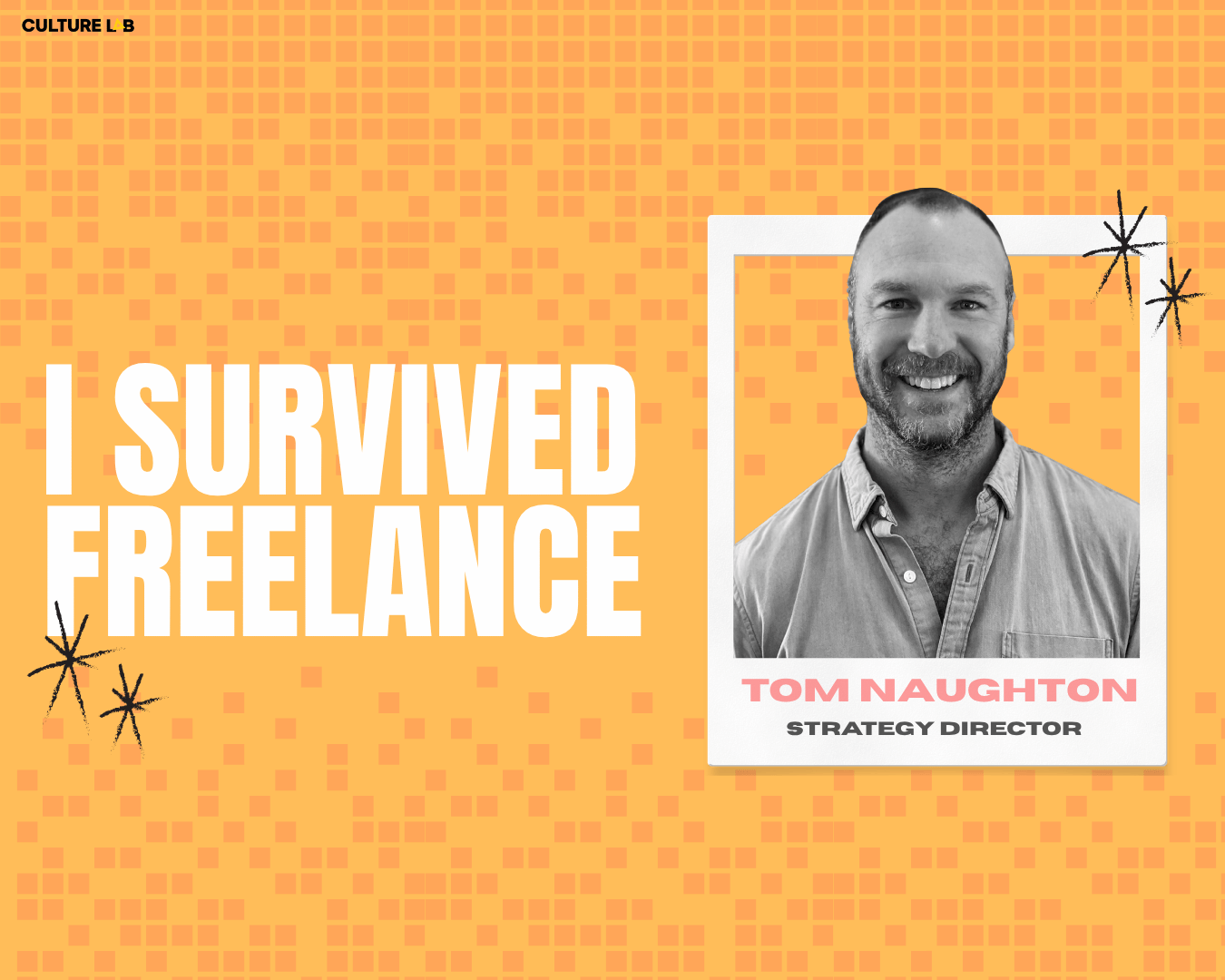



How Tom Naughton Survived Freelance

"Agencies don't need another person who does it the same way as ‘so-and-so’ because they already have that person.”
Leah Glass
·
October 19, 2026

Tom Naughton has written THOUSANDS of briefs. He’s worked at the BIGGEST agencies. He has SEVENTEEN YEARS of strategy under his belt. Hailing from the 2006 Brandcenter cohort, Tom is the MVP of strats.
And somewhere in the sea of processes and frameworks, Tom realized he was missing what made him fall in love with strategy in the first place: the thinking.
Second-year strategist Leah Glass sits down with Tom to talk about his decision to leave the big leagues and start freelancing.

What led you to pursue freelance strategy work?

After graduating from Adcenter in 2006 and working at agencies for 17 years, it became clear that agency life and strategy were changing.

 It became less and less about interesting thinking and more about needing to productize strategy and develop tools, labs, and things that agencies can sell to clients.

I was more interested in the work itself, so the transition to freelance became very much about doing the thinking again. Writing briefs and thinking about how I would do this if it were just me.

Which is freeing, because there's no sort of template or approach. Agencies and brands directly call and say, "Here's the problem, now go to town." It's exciting that there are no rules, but it's also a little daunting.

What does a typical workday look like for you?

For me, freelance is extraordinarily steady. I've been very lucky that the phone never stops ringing, in the best possible way. But the daily work is all across the board. Sometimes, I will get calls asking me to write briefs for different projects and clients. 

For Alto, I'll help them pitch new business, and when it comes in, I do the strategy work.

Or agencies with a big piece of legacy business will call and say, "We need to shake things up. We need some fresh thinking."

I'm able to work on so many clients and schedule my day how I want, jumping between different projects.

Do you have any advice for strategists looking to freelance?

Don't do it until you have been in this business long enough that people know who you are. More and more people have been going freelance, but the people who do the best in freelance are very senior and have been around.

At Alto, all of the strategists are ex-ECDs or CSOs. People know their names, their work, and are willing to take a bet on them. You need to be seasoned enough in this business that you have a network and a strong track record.

Are there any habits you've put into practice that have set you up to thrive?

I think the biggest thing is, when you work in agencies, everyone has a process or a strategic model they want you to follow. What has been helpful for me over the years is realizing that I can't do it anybody else's way.

In fact, what I've loved about freelancing is that doing it the way you want to do it is actually what somebody is after. They just don't know it yet.

You have to really learn to trust yourself and your instincts, and that is sort of a nice change of pace after decades of being in-house and at different agencies.

Do you have any advice for strategists beginning their careers?

I think the industry's changed a lot in terms of the agency landscape. The name on the door doesn't matter as much anymore.

I would find a place where your first boss is going to let you be you.

Agencies don't need another person who does it the same way as so-and-so because they already have that person.

You need to work for somebody who the industry thinks is great, and that person could be at the world's least exciting agency.


How Tom Naughton Survived Freelance

Leah Glass
·
October 19, 2026

"Agencies don't need another person who does it the same way as ‘so-and-so’ because they already have that person.”

Tom Naughton has written THOUSANDS of briefs. He’s worked at the BIGGEST agencies. He has SEVENTEEN YEARS of strategy under his belt. Hailing from the 2006 Brandcenter cohort, Tom is the MVP of strats.
And somewhere in the sea of processes and frameworks, Tom realized he was missing what made him fall in love with strategy in the first place: the thinking.
Second-year strategist Leah Glass sits down with Tom to talk about his decision to leave the big leagues and start freelancing.

What led you to pursue freelance strategy work?

After graduating from Adcenter in 2006 and working at agencies for 17 years, it became clear that agency life and strategy were changing.

 It became less and less about interesting thinking and more about needing to productize strategy and develop tools, labs, and things that agencies can sell to clients.

I was more interested in the work itself, so the transition to freelance became very much about doing the thinking again. Writing briefs and thinking about how I would do this if it were just me.

Which is freeing, because there's no sort of template or approach. Agencies and brands directly call and say, "Here's the problem, now go to town." It's exciting that there are no rules, but it's also a little daunting.

What does a typical workday look like for you?

For me, freelance is extraordinarily steady. I've been very lucky that the phone never stops ringing, in the best possible way. But the daily work is all across the board. Sometimes, I will get calls asking me to write briefs for different projects and clients. 

For Alto, I'll help them pitch new business, and when it comes in, I do the strategy work.

Or agencies with a big piece of legacy business will call and say, "We need to shake things up. We need some fresh thinking."

I'm able to work on so many clients and schedule my day how I want, jumping between different projects.

Do you have any advice for strategists looking to freelance?

Don't do it until you have been in this business long enough that people know who you are. More and more people have been going freelance, but the people who do the best in freelance are very senior and have been around.

At Alto, all of the strategists are ex-ECDs or CSOs. People know their names, their work, and are willing to take a bet on them. You need to be seasoned enough in this business that you have a network and a strong track record.

Are there any habits you've put into practice that have set you up to thrive?

I think the biggest thing is, when you work in agencies, everyone has a process or a strategic model they want you to follow. What has been helpful for me over the years is realizing that I can't do it anybody else's way.

In fact, what I've loved about freelancing is that doing it the way you want to do it is actually what somebody is after. They just don't know it yet.

You have to really learn to trust yourself and your instincts, and that is sort of a nice change of pace after decades of being in-house and at different agencies.

Do you have any advice for strategists beginning their careers?

I think the industry's changed a lot in terms of the agency landscape. The name on the door doesn't matter as much anymore.

I would find a place where your first boss is going to let you be you.

Agencies don't need another person who does it the same way as so-and-so because they already have that person.

You need to work for somebody who the industry thinks is great, and that person could be at the world's least exciting agency.

See More by

Leah Glass

→