.png)
.png)
.png)
.png)
According to Google Trends in 2017, some of the highest searched costumes of the season were Clown, Unicorn, Rabbit, Witch, Mouse, Pirate, Zombie, and Dinosaur. But not even a decade later, some of the most popular Halloween costume searches and trends are Wednesday Addams, Morticia Addams from The Addams Family, Elphaba, Glinda from Wicked for Good, Calypso, Athena, and Penelope from The Odyssey, and Rumi from KPop Demon Hunters.
Am I the Only One Seeing This?
The top searches went from generic costume names to specific movie character references. Over the last decade, Halloween has shifted from dressing up as something everyone would recognize to choosing something a little (or a lot) more niche. But why is that?
Something I Thought I Would Never Say: The Answer is Fortnite in 2018.
Fortnite became Google's #1 Halloween costume search in 2018, which is notable because this wasn't just a movie reference or a standard costume archetype. It was an internet phenomenon influenced by meme culture. If you think back to the top Halloween costumes so far this Halloween season, notice that the movie references The Addams Family, Wicked: For Good, The Odyssey, and KPop Demon Hunters were all drivers of popular TikTok trends: Wednesday's dance, Wicked: For Good trending audios, The Odyssey reviews and behind-the-scenes footage, and KPop Demon Hunters' “Golden.”
Peeking Behind the Cultural Mask
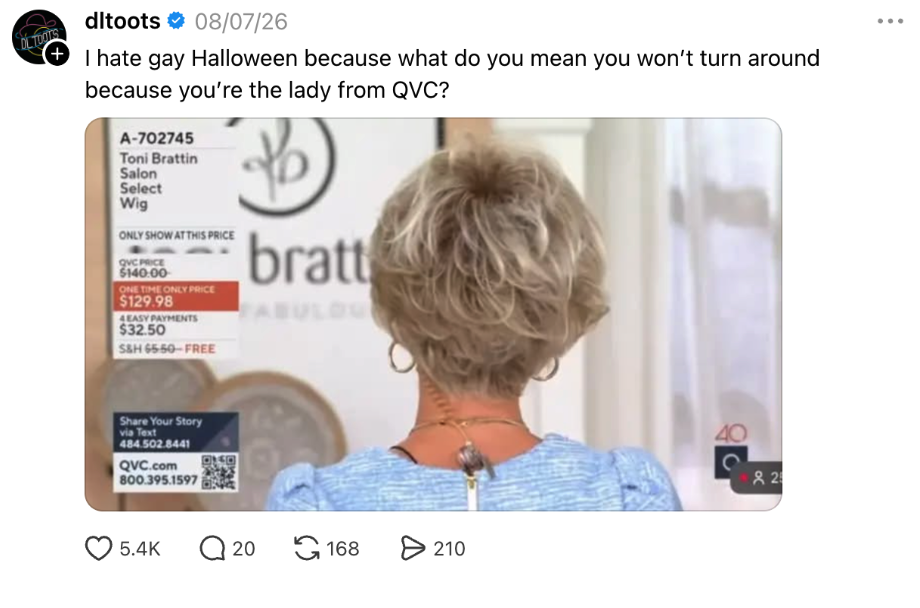
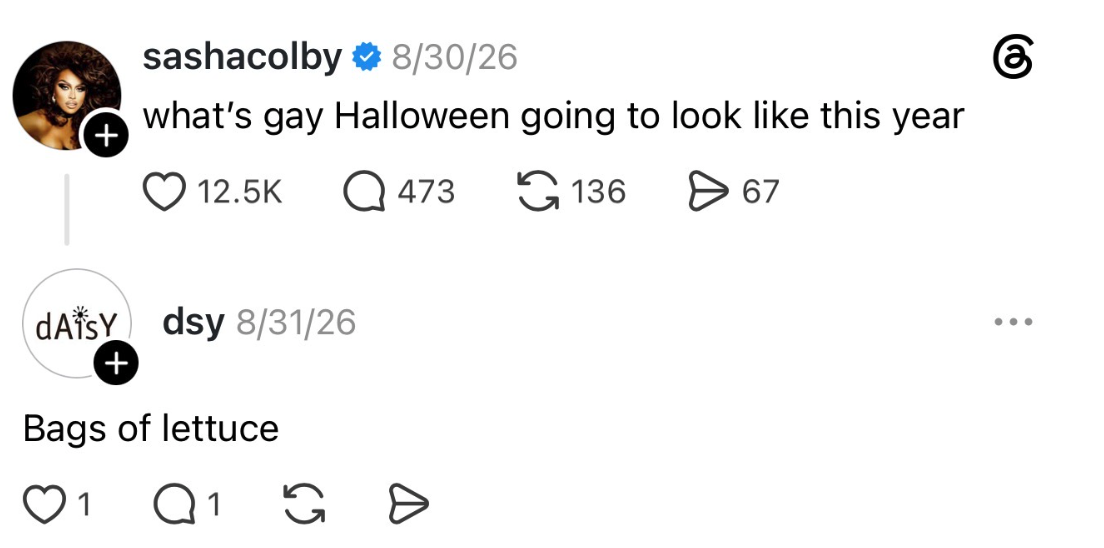
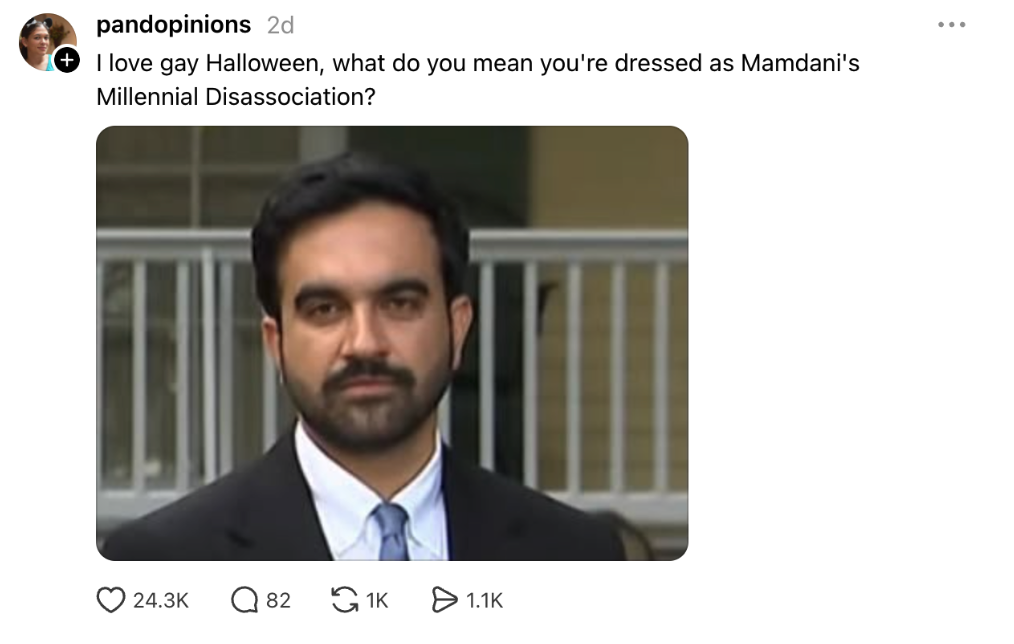
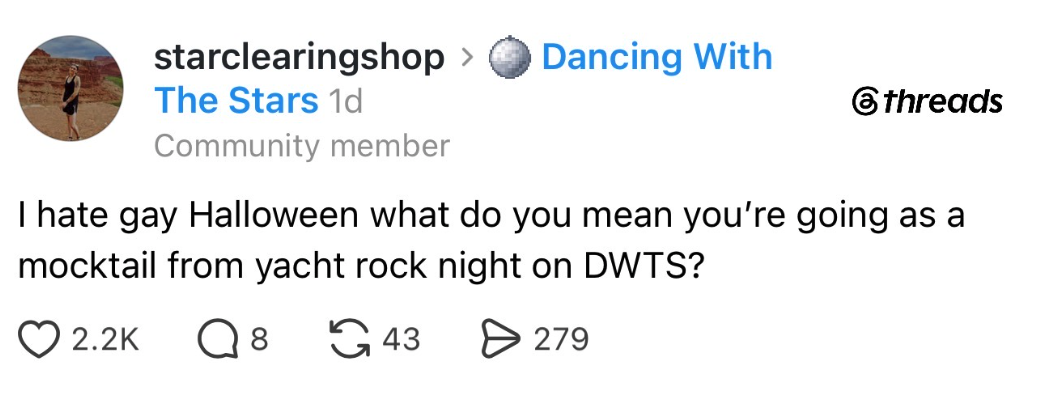
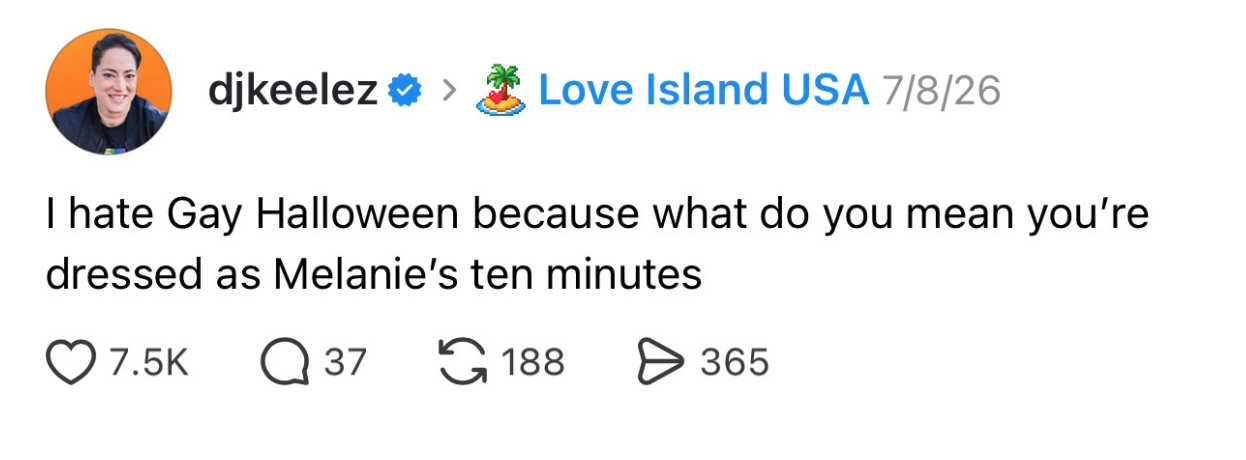
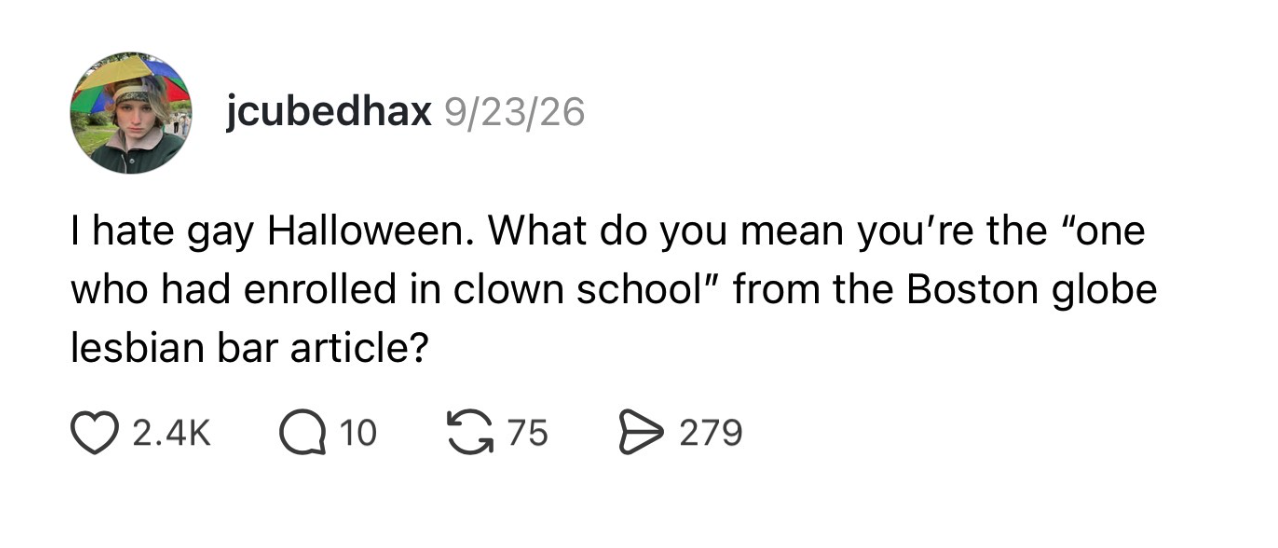
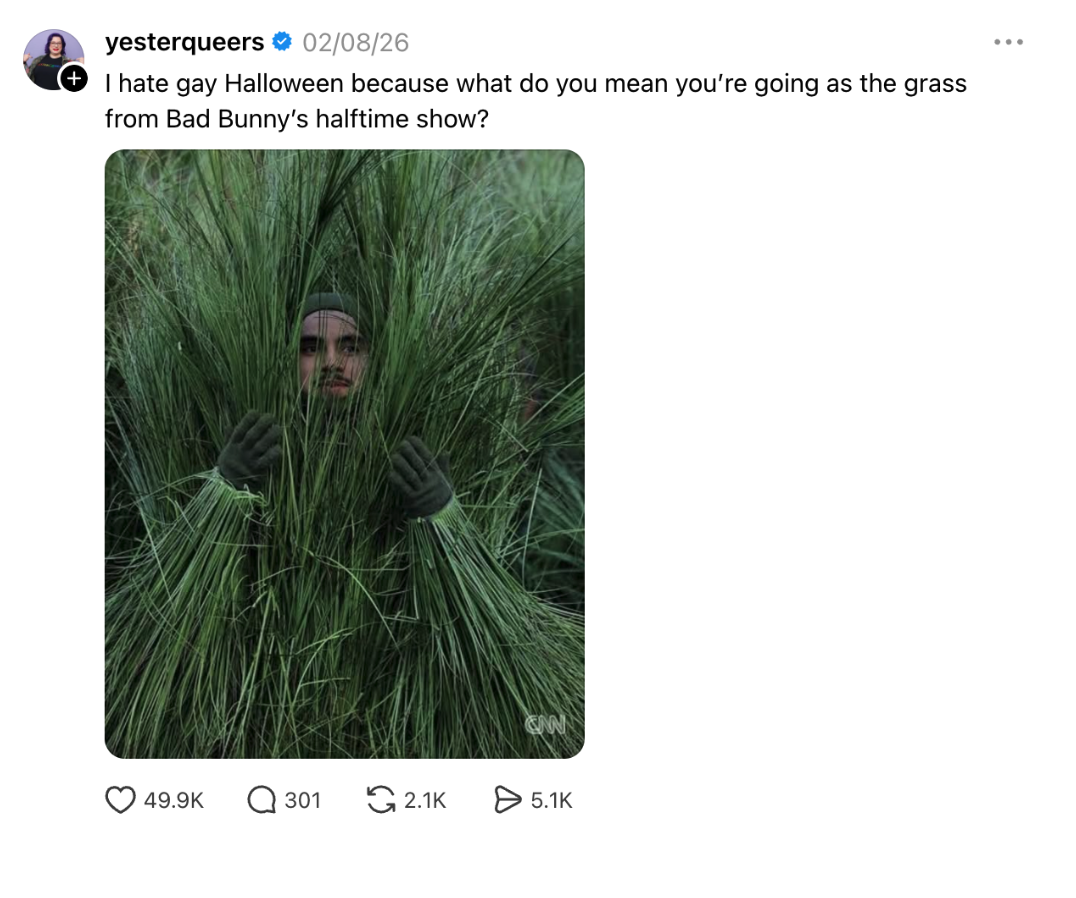
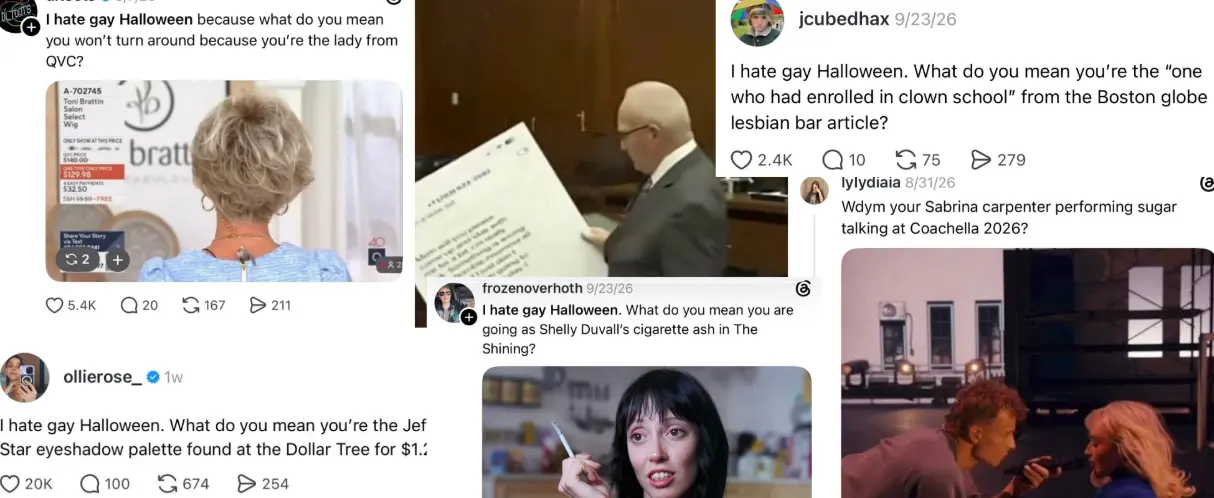
But those are the most popular searches across the entire nation. If you take a peek a level deeper, there is a strong force underneath these cultural references coming to the surface of the mainstream, coined “Gay Halloween.” In 2023, the phrase “I hate Gay Halloween because wdym” went viral online as people joked about queer Halloween parties where the costumes were so hyper-specific that you either immediately understood the reference or had absolutely no idea what you were looking at.
Iykyk, Obviously
And the phenomenon itself isn’t new. Queer communities have a much longer relationship with Halloween as a space for self-expression, experimentation, and cultural connection. Out explored how hyper-specific, cultural-based costumes function as cultural signals within queer spaces, where recognizing the same obscure reference can signal that you share the same cultural world. I strongly recommend reading the article and hearing it directly from the source. Halloween has continued to be a space for people to socially test who really gets them, instead of dressing as the most recognizable character. So maybe the shift isn't from generic costumes to niche costumes. It's from “Will everyone know what I am?” to “Will the right people know what I am?”
So, in honor of the spooky season officially starting, I want to share some of my favorite finds for hyper-niche costumes inspired by 2026 moments: