.png)
.png)
.png)
.png)
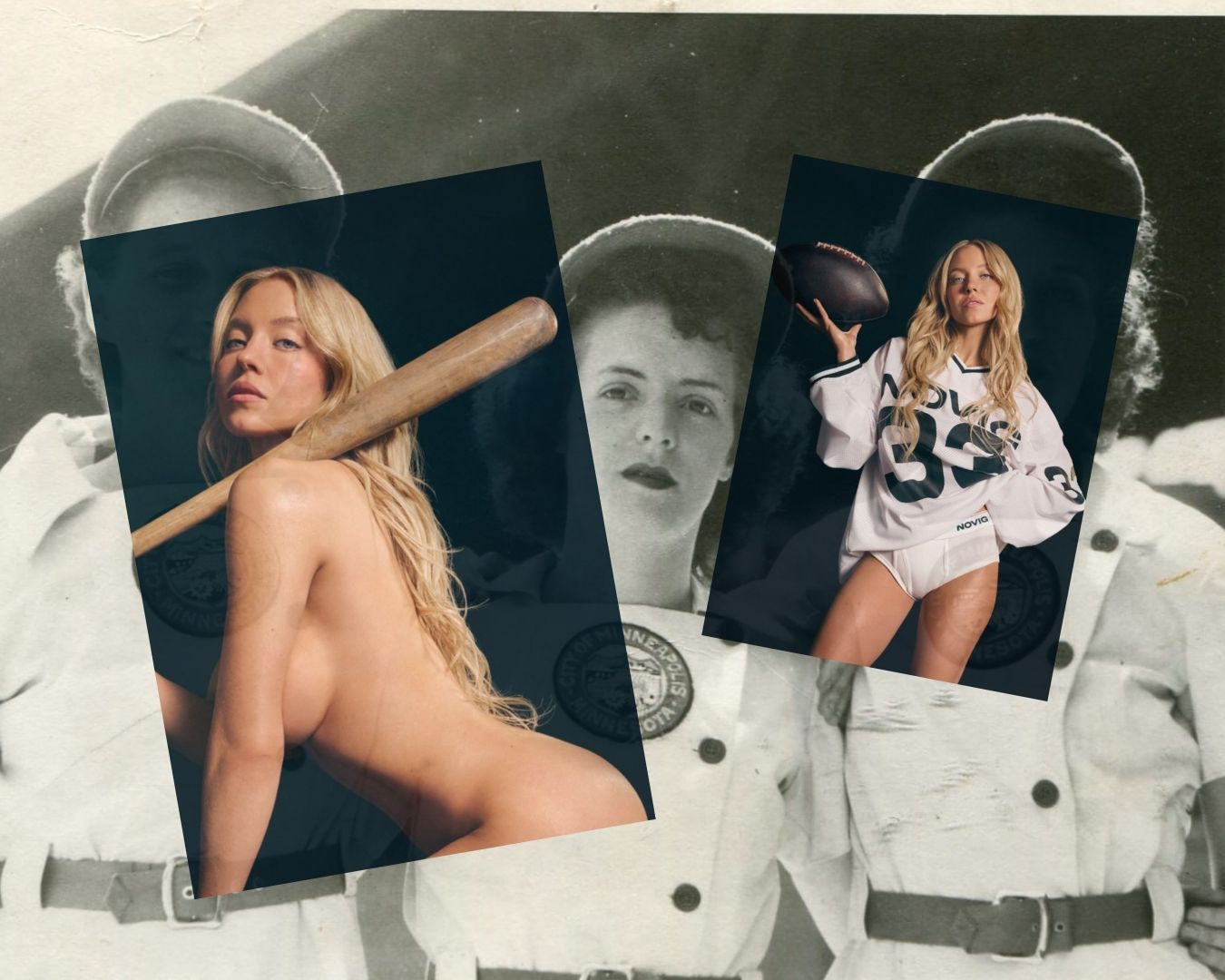
On September 10th, 2026, sports-betting platform Novig dropped the most controversial ad of the year. Starring Sydney Sweeney, who is a stakeholder of the brand, the 60-second ad features Sweeney, in the nude, holding various types of sports equipment.
“Think you know sports? Prove it. Novig is…just sports. So they wanted to show…just sports.” (Novig advertisement)
Within 24-hours of its release, the ad went viral. Thousands of responses, both in support and against the video, have been published. The ad has over 2 million views on YouTube, and Google searches for Novig have increased by 800%. Regardless of whether it was intentional rage bait or a gigantic brand oversight, this ad has transcended “just sports.”
It’s not black and white
Social media has enabled consumers to respond to content instantaneously. In less than a minute, you can write a comment on a video you disagree with or post a response expressing outrage. While there are benefits to quick reactions, the swiftness has led to black-and-white arguments.
My initial reaction to the ad was negative. I was put off by how old-fashioned the content seemed. More specifically, I agreed that it perpetuated a perception that female athletes have been fighting for years to overcome.
The more I thought about it, however, the more complicated my feelings became. I recognized Sweeney was an actress, not an athlete. Although I knew there was a line between embracing sexuality and performing for the male gaze, I wasn’t sure if Sweeney, Novig, both, or neither had crossed it.
To truly understand the implications of the Novig advertisement, you must first understand the context in which it was created, which is the purpose of this article.
It’s not new
Novig is not the first brand to use nudity to sell its product, and they won’t be the last. As early as the 17th century, tobacco companies were painting naked women on the inner compartments of snuff boxes for appeal to high-society men.
During World War I, Ivory Soap created an ad of sailors taking a bath paired with the scandalous tagline: It certainly seemed like home to rub in the mild Ivory lather from head to foot and then feel the delightful exhilaration following a brisk rub down.
In the Great Depression and in World War II, ads with sexual innuendos became increasingly more common. By 1950, references to sex and nudity were popping up in every consumer category: food, apparel, cosmetics, and even automobiles.
Following the American Sexual Revolution in the 70s, the United States advertising industry fully embraced the idea that sex sells. Sexual ads that made the biggest waves are listed below.
- 1971: Yves Saint Laurent (YSL) photographs a nude Jeanloup Sief for a perfume campaign
- 1979: Chanel No.5 ad features a topless woman in “Share The Fantasy”
- 1980: 15-year old Brook Shields stars in a Calvin Klein ad with the tagline, "You want to know what comes between me and my Calvins? Nothing,"
- 1991: The Go-Go ladies pose nude for PETA’s anti-fur campaign: “I’d Rather Go Naked”
- 1992: 17-year old Kate Moss is topless in a Calvin Klein jeans ad
- 1994: Wonderbra billboard features Eva Herzigova in a bra and underwear
- 2000: YSL creates one of the most complained-about advertisements of all time, showing Sophie Dahl completely nude
- 2002: YSL publishes a full-frontal nude model for a fragrance ad
- 2003: Gucci campaigns feature models with the letter G shaved into their pubic hair
- 2005: Paris Hilton stars in the first sexy Carl’s Jr ad
- 2007: Tom Ford perfume ad features a fully naked model
- 2009: American Apparel features an underage, partially naked model in a new campaign
- 2010: Female models flash security cameras for Diesel's “Be Stupid” campaign
It’s not profitable
University of Illinois advertising professor John Wirtz conducted a meta-analysis of 78 peer-reviewed studies that investigated the effectiveness of sexually driven advertisements. The analysis found that sexual appeals have zero effect on a consumer’s intention to buy products. While the ad itself may be more memorable to consumers, sex appeal does not increase the memorability of brand or product names to any extent.
A similar study was conducted in the UK by psychology students at the University College London. 182 participants were shown an advertisement. The ads were for the same brand, but one used sexual messaging, and the other did not. The study found that using sex in advertising didn't help viewers consciously remember the brands, harmed their subconscious memory of the brand, and actually interfered with their ability to remember the TV program they were watching right before the ad aired.
In advertising, this is called the vampire effect. When an ad is extremely shocking, the core message is sucked out of the advertisement. Consumers remember the distraction, not the product, and the brand name is forgotten.
But controversy around the Novig ad is only partially about nudity and sex appeal. Many criticisms focus on women’s sports. Learning the history of female athletes paints a vibrant picture of the world in which the Novig ad was released.
It’s not out of the blue
In the midst of World War II, male baseball players were scarce, so businessmen had no choice but to turn to women. In 1943, the All-American Girls Professional Baseball League was formed. Although female participation in baseball had started as early 20th century, the All-American League was the first official US organization for female sports teams.
Players were recruited for their talent and for their beauty. Each recruit was required to attend charm school classes, where players were taught how to maintain a feminine image while playing the game. Players were given beauty kits with face powder, blush, lipstick, and hand lotion. Makeup was part of the short-skirt uniform, and players were mandated to follow a strict off-field code of conduct.
The emphasis of beauty alongside skill for the first female sports team was a strong indicator of what was to follow for all female athletes.
It wasn’t until Second-Wave feminism in the 1970s that academics started to research the sexualization of female athletes. In the last fifty years, there has been a significant number of articles published concerning the study of the representation of female athletes. In each study, some of which are listed below, the conclusion was the same: female athletes are oversexualized by the media and by individuals.
- Gender equity in televised sports: A comparative analysis of men's and women's NCAA Division I basketball championship broadcasts, 1991–1995
- Sexualization of female athletes through media in historical process
- Olympic Athletes or Beauty Queens? The Sexualization of Female Athletes
- New Rules for New Times: Sportswomen and Media Representation in the Third Wave
- Athlete or Sex Symbol: What Boys Think of Media Representations of Female Athletes
- The Sexualization of Female Athletes’ Bodies as Portrayed by Social Media
- Recognition Issues in Televised Representations of High-Level Women Athletes during World Championships and the Olympics: Deconstructing the “Male Gaze,” Focusing on Sport Performance and Considering Discrimination from an Intersectional Perspective
- Sex Objects, Athletes, and Sexy Athletes: How Media Representations of Women Athletes Can Impact Adolescent Girls and College Women
Despite the research, change over fifty years has been minimal. In 2021, the Norwegian Women’s Beach Handball team chose to wear elastic shorts instead of bikini bottoms. The European Handball Federation fined the team for “improper clothing.” The events sparked global outrage, and men and women from around the world shared their support for the team’s decision.
The same year, US champion runner Lauren Fleshman publicly called the Olympics’ female athlete kits “costumes born of patriarchal forces.” Academics agreed. The Representation Project, for example, found female athletes in the 2021 Olympics were ten times more likely to be filmed in an objectifying manner than men.
For the Paris Olympics in 2024, sportswear brand Mizuno developed high-infrared fabric for Japan’s female volleyball team to stop illicit photography. The new uniforms were designed to stop visible light cameras from being used to photograph athletes in their underwear.
In July 2026, the European Broadcasting Union published new camera guidelines for media coverage of female sports in a document titled Raising The Bar.
“The sexualization of women athletes through selective camera angles and editing choices continues to be a significant concern across many sports broadcasts. Lingering shots on bodies, low-angle cameras that capture revealing views, and excessive slow-motion replays that serve no technical or storytelling purpose are among the issues observed in the media coverage of women’s athletics competitions today. These choices carry profound implications.” (Raising The Bar, 2026)
It’s not empowerment
“What happened to “My body my choice” (Instagram comment, 2026)
“Sexual empowerment” has been tumbling around the zeitgeist for several years. Recently, it has been used in discussions surrounding OnlyFans content creators. However, while adult-content creators may be sexually empowered, their content is not necessarily sexually empowering.
Sexual empowerment is positive sexual outcomes, feeling secure and good about one’s sexuality, having the ability to communicate desires and boundaries, and enjoying one’s sexual encounters. To be sexually empowered, you should have complete bodily autonomy, freedom from shame, and a focus on pleasure, not validation.
Empowerment does not come from slapping the tagline “look sexy for you, not for him,” on an advertisement of a woman in lingerie. To enable women to embrace their sexuality, you must inspire confidence, focus on their perspective (not the male gaze), and encourage assertive communication.
Sexual empowerment comes from putting the power in the hands of the individual.
This is way Onlyfans is labeled as empowering. On OnlyFans and similar platforms, the creators are the ones in control. Their work is lucrative, rewarding, and autonomous. Most independent creators feel no pressure to say yes to a client or to perform outside of their comfort zone because it is their platform and their account (there are people who are an exception to this and are being taken advantage of on the platform).
“If someone puts on "sexy" clothing and goes out in public or takes a selfie and shares it, they have the power because they chose themselves to put on the clothes. However, this can be complicated by beauty standards and respectability politics, which can compel someone to wear sexy clothing because they believe that they won't be beautiful otherwise, or compel them not to wear sexy clothing because they are shamed if they do.” (Everyday Feminism)
It’s not harmless
Oversexualizing female athletes is not a victimless crime. Not only does it have a mental impact on the athletes themselves, but the consequences for society at large are substantial and long-lasting.
By emphasizing an athlete’s body via uniform design, commentary, or media content, there is a de-emphasis on skill, performance, and other personal characteristics. The Journal of Social Psychology found that when sexualized, capable, strong, and determined female athletes are perceived as less capable by both male and female viewers.
“Sydney’s an actress. We’re a prediction market that is focused on sports, and that was the story she was communicating.” (Novig CEO Jacob Fortinsky)
For male viewers, this often leads to the sexual objectification of women. Sexual objectification is defined as “the act of treating a person as a mere physical object for pleasure or consumption rather than a complete human being with thoughts, feelings, skills, and rights.” Stripping female athletes down to only their physical traits dehumanizes them in the male gaze. This perception fuels sexist attitudes and violence towards women.
“Men who implicitly associate women with objects demonstrate a higher propensity for sexual harassment, physical aggression, and intimate partner violence” (National Institute of Health)
For female viewers, sexualizing athletes in the media leads to self-objectification. Objectification Theory, developed by psychologists Barbara Fredrickson and Tomi-Ann Roberts, proposes that women and girls internalize social and environmental perceptions of women. So, when exposed to comments or media that sexualize women’s bodies, females will view themselves in the same way.
“Self-objectification occurs when people learn to view their own bodies from an outside perspective, which is a natural result of living in an environment where bodies are objectified.” (More Than A Body: Your Body Is an Instrument, Not an Ornament by Lexie Kate)
Self-objectification can lead to body shame, anxiety, depression, low self-esteem, eating disorders, obsessive rumination, lower energy, poorer academic performance, and sexual dysfunction. This is particularly a concern for the psychological development of adolescent females who have higher rates of low body image and self-criticism than young boys.
When it comes to sports, the effects of self-objectification can be seen and measured.
UN Women reports that by age fourteen, girls drop out of sports at twice the rate of boys.
Identified reasons include stereotypes, pressure, body changes, loss of confidence, and lack of support.
“Because when us women in sport are still constantly reduced to our bodies and our sex appeal, it matters WHAT MESSAGE WE CHOOSE to put out there. Women shouldn’t have to choose between being sexual and being athletes. But when you take the imagery of sport, strip away the athleticism, and turn it into a sexualised image designed to attract the male gaze, while calling it “just sports” you’re reinforcing exactly what women in sport have been fighting against for years. We are athletes. Not just bodies.” (Professional Athlete Marsha Dunkel, Instagram post)
It’s not isolated
Reporter for The New Yorker, Jennifer Wilson, published an article three days before the Novig advertisement was posted. Her article, “Have conservatives taken sexy back?” summarizes the larger context behind the Novig advertisement.
In January 2025, Lauren Sanchez attended President Trump’s inauguration wearing a white lace bra. Wilson cites this as the inciting incident that brought lingerie to the front lines of America’s culture wars. Eleven months later, in December 2025, President Trump bought a million dollars of stock in lingerie brand Victoria’s Secret.
This year, 2026, Wilson attended Stage Coach, a country music festival often referred to as “Trumpchella” because it takes place on the same grounds as Coachella and attracts a more right-wing crowd than Coachella does. Sydney Sweeney’s lingerie line, Syrn, had a booth at the festival, which Wilson visited. Interestingly, Lauren Sanchez and her fiancé, Jeff Bezos, are both investors in Syrn.
“When I was growing up, in the early two-thousands, “conservative” meant conservative. The right was the party of George W. Bush, abstinence-only sex education, and Christian evangelical teens who recited chastity pledges and wore promise rings… Now, at Trumpchella, I was sipping a Made You Look margarita while examining Syrn’s Hoedown Throwdown: a three-pack of thongs emblazoned with slogans such as “tight jeans, loose morals” and “cowboys ride harder and stay on longer.” (Jennifer Wilson, Have conservatives taken sexy back?)
Throughout the article, Wilson reflects on the events and people who helped bring sex appeal into the conservative party. Looking at the events together creates a clear picture of how the shift from traditional values happened.
- Tape of Donald Trump talking about grabbing a woman “by the pussy”
- Dave Portnoy, founder of Bartstool Sports, blogs that an ESPN journalist’s only job was to “make men hard”
- Ultra Right beer releases a “MAGA Babes” calendar
- Arby’s hires conservative WNBA player Sophie Cunningham, announcing the partnership with a picture in a t-shirt reading “Look who has the meats now”
- Founding of Make America Hot Again, a group for young conservatives in NYC
- Evie magazine, a conservative magazine founded by former model Brittany Hugoboom in 2019 for the “feminine, not feminists”
The biggest contributor to the rise of conservative sexualization, however, was the media coverage of the #MeToo movement from 2016 to 2019.
Lingerie brands were in a crisis after #MeToo, or at least the media said they were. New outlets published articles such as “Did #MeToo kill the push-up bra?” and “Victoria’s Secret? In 2018, Fewer Women Want to Hear It.” Despite limited evidence of #MeToo impacting sales, CEOs of lingerie brands became hesitant to talk about or reference sex. Instead, these brands turned to penitenet marketing.
“Aerie announced a capsule collection with the Olympic gymnast and sexual-assault survivor Aly Raisman, fifteen per cent of whose proceeds would go to a nonprofit combatting child sexual abuse (though only up to seventy-five thousand dollars). Kim Kardashian launched her shapewear company, skims, in 2019, and its first model was Alice Marie Johnson, a formerly incarcerated woman whose case Kardashian had publicized. And Parade, one of the many female-led direct-to-consumer brands that entered the underwear market during #MeToo, included a donation button on its website’s checkout page; the company later told The Cut that those customer donations had covered, among other things, “twelve weeks of therapy for Black women.” (Jennifer Wilson, have conservatives taken sexy back?)
For conservatives, the #MeToo movement alongside an intentional step-back from lingerie brands presented an opportunity. Conservatives could paint the left as sex-negative and embrace Botox, fillers, breast implants, and cleavage as their own.
“It’s the bimbofication of MAGA.” (Raquel Debono, Make America Hot Again founder)
Sydney Sweeney has become the paragon of this post-#MeToo, sexy, Republican woman. Sweeney is a registered Republican, but has not publicly shared her political beliefs or stances. So where she lies on the political spectrum is not publicly known. More to the point, however, is how Republicans perceive her.
She shared the stage at Stage Coach with Chase Rice and Riley Green, both of whom performed at Turning Point USA’s festival in 2022. Her American Eagle ad provoked the left, and her Novig ad did an even better job of it. She is, in many ways, the conservative golden girl.
Across social media, internet users are defending Sweeney with comments accusing the posters of jealousy and hypocrisy. The following comments are from Instagram.
- “Y'all just hate her because she's hot.... I bet if it was Lizzo y'all would be like "yaaaaas queen, your body your choice"
- “You’re just pissed that she’s looks how she does and you, well, you look like that.”
- “A bit jealous, ain't you? :D”
- “Jealousy at peak”
- “What's wrong with it it's her life her choice”
- “Jealousy is curable with good therapy, don't feel bad about it”
- “Great Genes 🤤🔥”
- “Half of the sportsmen and women have been pictured in FHM or Playboy, but suddenly they are all monks and nuns…”
It’s not over
The Novig ad isn’t about sports, and it never could have been about "just sports."
This ad exists in a world where advertisements, sports media, and society have been oversexualizing women for centuries. We can't separate the reality of self-objectification and the staggering drop-off of girls in sports from the imagery we choose to celebrate and consume just because it will get more views. As consumers, it's up to us to stop rewarding the cheap thrill of objectification with our attention, our clicks, and our dollars, and instead demand a media culture that values females for more than the exposure of their bodies.
Additional sources for this article
- Carl’s Jr sexist ad drags women back to the dark ages (Article)
- The effects of advertisements that sexually objectify women (Article)
- The consequential effect of sexual appeals on the place of women in society (Article)
- Sex sells? The role of female agency in sexualized advertisement (Article)
- The Art and Impact of Sex Driven Marketing (TedTalk)
- Sex sells! And other advertising mythologies (TedTalk)
- The dangerous ways ads see women (TedTalk)
- The art and impact of sex-driven marketing (TedTalk)
- Killing Us Softly 4 (Movie)
- Celebrities who have gone naked for ad campaigns (Article)
- Olympic athletes or beauty queens? The sexualization of female athletes (Article)
- The sexualization of women in sports extends even to what they wear (Article)
- ESPN Body 2017 (Magazine)
- Raising the bar: guidelines for respectful media coverage in women’s athletics (Report)
- Have conservatives taken sexy back? (Article)
- The history of sex in advertising (Article)
- Sexism Sells (Article)
- The sources and consequences of sexual objectification (Article)
- The role of objectification in young men’s perpetration of intimate partner violence (Article)
- National Organization for Women (website)
- Gender Differences in Reactions to the Sexualization of Athletes (Article)
- Objectification Theory