


The Children Yearn for Medieval Times

Why Jousting, Banquets, and Dragons are suddenly just as modern as anything else.
Kennon Cummings
·
November 15, 2026

In the distant era of the European medieval period, I can only imagine how thrilling and horrifying the year 2026 would have sounded. For many poor souls, the present itself was already too taxing even to consider the future. For the visionary type, the inventions of their predecessors were speculated, near-incomprehensible to the modern eye— both admirable in spirit but retroactively pitiful, knowing what we’re capable of now.

‍

Whether these future-gazers were lowly serfs or mighty kings, I can only imagine that the last thing they’d suspect seeing from the future was us lovingly cherishing their very present.

HEAR YE, HEAR YE!

In a world where younger people frequently complain about being ‘born in the wrong generation’, talk of the 50s and 70s isn’t all too unexpected. However, talk of longing for a time more than five hundred years ago is much more of a shock.

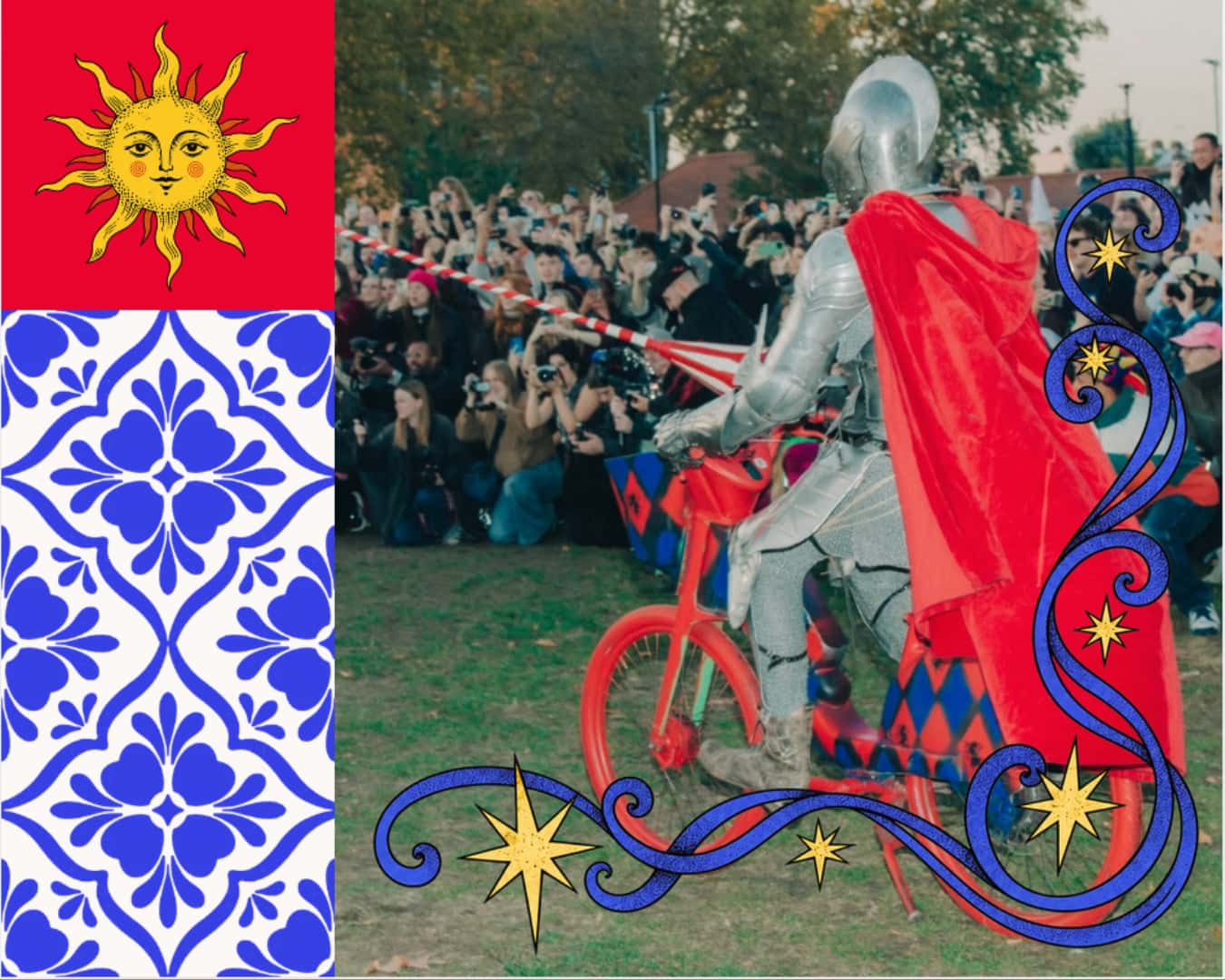
A sudden uptick in fantasy-loving knights and royalty seems to have taken over pop culture over the past few years. Singers are coming to performances fully clad in armor, one of the most popular YouTube interview shows is held in a mighty queen’s Royal Court, and even our very public transport bikes have transformed into mighty steeds.

Among these spectacular performances, the everyday citizen has also become more and more of a participant in all things playfully medieval: Renaissance Festivals continue to draw larger and larger crowds, further spurred on by years and years of social media posts fawning about their experiences.

SO… WHAT SEEMS TO BE THE POINTETH?

Even as a lover of all things whimsically fantastical, I can admit how oxymoronic it sounds to love medieval things in the present day. The world has changed about a hundred times over since the 1500s, technology is more powerful than it’s ever been, and we’re still talking about crossbows…?    

Before getting into the why, it’s important to note that, despite this favoritism towards the medieval period specifically, historical accuracy is…. Flimsy. In reality, the Middle Ages spanned over a millennium, containing a large variety of societies and cultures. The fantasy enthusiast pays no mind to these intricacies and instead mishmashes this era together into a singular entity, and then some: Victorian Era architecture, 16th-century pirate folktales, Edo Period samurai weapons, Dungeons and Dragons beasts from the 1970s, and much more.  

In this way, the medieval lifestyle becomes less of a historical point in time and more of a collective mindset of both the beauty of ‘how things were’ mixed in with current-day progressive sentiments on how to make that point in time much more accepting. I’d argue that very few people would want to magically time travel back to the real 1500s, but would rather simply imagine a fictional time and place where they’re free to live out all of their kingdom dreams.  

More than anything, I think this love of a fantasy lifestyle captures a sense of awareness and wonder we wish we could hold onto more strongly as a society— to not relinquish the joys of modern-day technology and cultural lifestyles, but to sometimes put things on pause to savor things for a moment longer as our ancestors did. This means of escapism, when played out right, only makes us more aware of ourselves outside of these fantastical scenarios. Who knows? Amidst these moments of contemplation, we may just re-find the magic written in our fondest fairytales.    
The Children Yearn for Medieval Times

Kennon Cummings
·
November 15, 2026

Why Jousting, Banquets, and Dragons are suddenly just as modern as anything else.

In the distant era of the European medieval period, I can only imagine how thrilling and horrifying the year 2026 would have sounded. For many poor souls, the present itself was already too taxing even to consider the future. For the visionary type, the inventions of their predecessors were speculated, near-incomprehensible to the modern eye— both admirable in spirit but retroactively pitiful, knowing what we’re capable of now.

‍

Whether these future-gazers were lowly serfs or mighty kings, I can only imagine that the last thing they’d suspect seeing from the future was us lovingly cherishing their very present.

HEAR YE, HEAR YE!

In a world where younger people frequently complain about being ‘born in the wrong generation’, talk of the 50s and 70s isn’t all too unexpected. However, talk of longing for a time more than five hundred years ago is much more of a shock.

A sudden uptick in fantasy-loving knights and royalty seems to have taken over pop culture over the past few years. Singers are coming to performances fully clad in armor, one of the most popular YouTube interview shows is held in a mighty queen’s Royal Court, and even our very public transport bikes have transformed into mighty steeds.

Among these spectacular performances, the everyday citizen has also become more and more of a participant in all things playfully medieval: Renaissance Festivals continue to draw larger and larger crowds, further spurred on by years and years of social media posts fawning about their experiences.

SO… WHAT SEEMS TO BE THE POINTETH?

Even as a lover of all things whimsically fantastical, I can admit how oxymoronic it sounds to love medieval things in the present day. The world has changed about a hundred times over since the 1500s, technology is more powerful than it’s ever been, and we’re still talking about crossbows…?    

Before getting into the why, it’s important to note that, despite this favoritism towards the medieval period specifically, historical accuracy is…. Flimsy. In reality, the Middle Ages spanned over a millennium, containing a large variety of societies and cultures. The fantasy enthusiast pays no mind to these intricacies and instead mishmashes this era together into a singular entity, and then some: Victorian Era architecture, 16th-century pirate folktales, Edo Period samurai weapons, Dungeons and Dragons beasts from the 1970s, and much more.  

In this way, the medieval lifestyle becomes less of a historical point in time and more of a collective mindset of both the beauty of ‘how things were’ mixed in with current-day progressive sentiments on how to make that point in time much more accepting. I’d argue that very few people would want to magically time travel back to the real 1500s, but would rather simply imagine a fictional time and place where they’re free to live out all of their kingdom dreams.  

More than anything, I think this love of a fantasy lifestyle captures a sense of awareness and wonder we wish we could hold onto more strongly as a society— to not relinquish the joys of modern-day technology and cultural lifestyles, but to sometimes put things on pause to savor things for a moment longer as our ancestors did. This means of escapism, when played out right, only makes us more aware of ourselves outside of these fantastical scenarios. Who knows? Amidst these moments of contemplation, we may just re-find the magic written in our fondest fairytales.    

See More by

Kennon Cummings

→