The Evolution of Advice

For anyone who's searched for moral clarity in a Quora forum
Nan Marsh
·
October 1, 2026

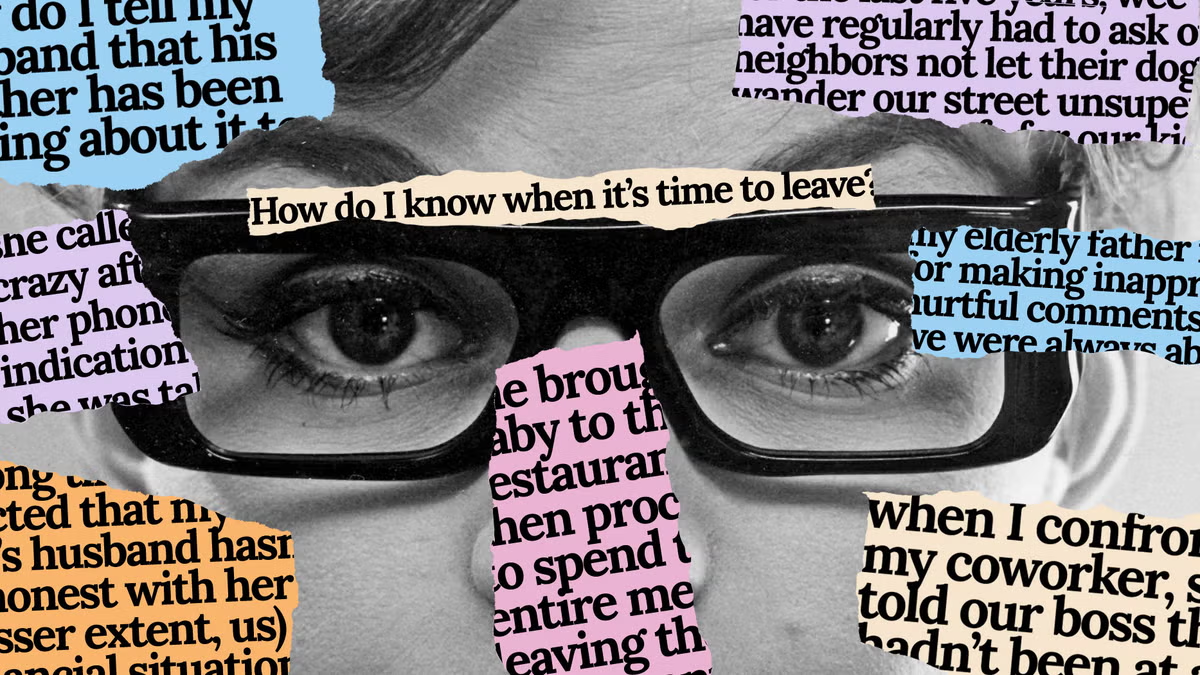
I’ve always wondered why it’s so much easier to ask a stranger for advice than your own best friend. Maybe it’s a Libra thing, or maybe I need to be more honest with myself, but I just find it awkward. Oftentimes, the advice I’m looking for involves people in my own personal life, and I can't exactly ask my mom for advice if the problem is, well, my mom. Like everyone else, I turn to the internet for moral guidance, knowing very well that,

With the Internet as your witness, you never need to be the one in the wrong. 

That friction is getting disturbingly smaller with chatbots, which infamously tell people exactly what they want to hear. If you’re looking for confirmation to something you’ve already made up your mind about, you don’t need to flip through multiple Reddit forums until someone says you’re not a disappointment. Someone asked ChatGPT if it was okay that he was leaving his wife and children, and it reassured him of the “importance of putting yourself first”.

The truth is, relying on strangers to solve problems with the people we're closest to is an old habit, not some new crisis.

It’s exactly why the advice column has thrived as a medium for understanding since the 17th-century. The Athenian Mercury was a London periodical and the world's first personal advice column. Readers could anonymously write in with questions about philosophy, love, science, and marital etiquette, and receive an answer from a “John Dunton”. Centuries later, “Ask Ann Landers” and “Dear Abby” would rise to popularity in the 1950’s, attracting millions of readers every day who trusted them to lay down the social code.

By 1993, Ask Ann Landers appeared in over 1,200 newspapers with roughly 90 million readers. The column's biggest competitor, Dear Abby, reached an estimated 110 million daily readers. 

Both came from similar cultural starting points, armed with sharp Midwestern pragmatism and a deep devotion to etiquette, but their voices diverged in ways that gave them unique points of view. Ann Landers played the role of the wise, slightly stern matriarch, carrying the weight of moral duty, civic responsibility, and traditional values. Dear Abby, on the other hand, was lighter, snappier, and a bit more conversational. While Abby still respected traditional morality, her signature weapon was humor. 

In a digital age where you can find advice from every perspective, turning to a single printed advice column is a foreign, yet strangely clarifying concept.

As someone who sees both sides of the story to an immobilizing degree, it’s refreshing to hear voices that are absolute in the stances they take. At the same time every morning, millions of Americans would flip open the paper to read, hoping that their own personal questions about interpersonal life might be addressed. But who gets to dictate what advice is good or not, especially when a whole country is listening?

While writing this article, I was shocked to discover that the writers behind “Ask Ann Landers” and “Dear Abby” were literally twin sisters engaged in a lifelong rivalry.

Born just 17 minutes apart on July 4, 1918, Eppie and Popo Friedman were inseparable for the first half of their lives. They wore matching clothes, attended the same college, and had a joint wedding on their 21st birthday. However, in 1955, Eppie won a nationwide contest to take over the already famous “Ask Ann Landers” column at the Chicago Sun-Times. 

Despite having no prior journalism experience, Eppie achieved celebrity-status for her trusted advice.

Her sister, Popo, was a constant source of moral support. However, a few months later, Popo decided that she wanted to launch her own competing column in the San Francisco Chronicle. When Eppie discovered that her own sister had copied her in secret, they began a contentious rivalry that ultimately bounced off of one another. If one sister gave advice that backfired, the other would get notes asking, “What do you think about this?”

Even the biggest celebrity advice columnists struggled with their family.

I set out to figure out what makes advice worth taking. Do we need someone who knows our lives inside and out, or just a cool stranger we project onto (i.e. Jemima Kirke’s deadpan advice column in Elle)? 
I’ve come to realize the best guidance doesn't come from a tailored chatbot or some unyielding oracle. It comes from people real enough to show their own imperfections, leaving you free to piece things together for yourself. 

The Evolution of Advice

Nan Marsh
·
October 2, 2026

For anyone who's searched for moral clarity in a Quora forum

I’ve always wondered why it’s so much easier to ask a stranger for advice than your own best friend. Maybe it’s a Libra thing, or maybe I need to be more honest with myself, but I just find it awkward. Oftentimes, the advice I’m looking for involves people in my own personal life, and I can't exactly ask my mom for advice if the problem is, well, my mom. Like everyone else, I turn to the internet for moral guidance, knowing very well that,

With the Internet as your witness, you never need to be the one in the wrong. 

That friction is getting disturbingly smaller with chatbots, which infamously tell people exactly what they want to hear. If you’re looking for confirmation to something you’ve already made up your mind about, you don’t need to flip through multiple Reddit forums until someone says you’re not a disappointment. Someone asked ChatGPT if it was okay that he was leaving his wife and children, and it reassured him of the “importance of putting yourself first”.

The truth is, relying on strangers to solve problems with the people we're closest to is an old habit, not some new crisis.

It’s exactly why the advice column has thrived as a medium for understanding since the 17th-century. The Athenian Mercury was a London periodical and the world's first personal advice column. Readers could anonymously write in with questions about philosophy, love, science, and marital etiquette, and receive an answer from a “John Dunton”. Centuries later, “Ask Ann Landers” and “Dear Abby” would rise to popularity in the 1950’s, attracting millions of readers every day who trusted them to lay down the social code.

By 1993, Ask Ann Landers appeared in over 1,200 newspapers with roughly 90 million readers. The column's biggest competitor, Dear Abby, reached an estimated 110 million daily readers. 

Both came from similar cultural starting points, armed with sharp Midwestern pragmatism and a deep devotion to etiquette, but their voices diverged in ways that gave them unique points of view. Ann Landers played the role of the wise, slightly stern matriarch, carrying the weight of moral duty, civic responsibility, and traditional values. Dear Abby, on the other hand, was lighter, snappier, and a bit more conversational. While Abby still respected traditional morality, her signature weapon was humor. 

In a digital age where you can find advice from every perspective, turning to a single printed advice column is a foreign, yet strangely clarifying concept.

As someone who sees both sides of the story to an immobilizing degree, it’s refreshing to hear voices that are absolute in the stances they take. At the same time every morning, millions of Americans would flip open the paper to read, hoping that their own personal questions about interpersonal life might be addressed. But who gets to dictate what advice is good or not, especially when a whole country is listening?

While writing this article, I was shocked to discover that the writers behind “Ask Ann Landers” and “Dear Abby” were literally twin sisters engaged in a lifelong rivalry.

Born just 17 minutes apart on July 4, 1918, Eppie and Popo Friedman were inseparable for the first half of their lives. They wore matching clothes, attended the same college, and had a joint wedding on their 21st birthday. However, in 1955, Eppie won a nationwide contest to take over the already famous “Ask Ann Landers” column at the Chicago Sun-Times. 

Despite having no prior journalism experience, Eppie achieved celebrity-status for her trusted advice.

Her sister, Popo, was a constant source of moral support. However, a few months later, Popo decided that she wanted to launch her own competing column in the San Francisco Chronicle. When Eppie discovered that her own sister had copied her in secret, they began a contentious rivalry that ultimately bounced off of one another. If one sister gave advice that backfired, the other would get notes asking, “What do you think about this?”

Even the biggest celebrity advice columnists struggled with their family.

I set out to figure out what makes advice worth taking. Do we need someone who knows our lives inside and out, or just a cool stranger we project onto (i.e. Jemima Kirke’s deadpan advice column in Elle)? 

I’ve come to realize the best guidance doesn't come from a tailored chatbot or some unyielding oracle. It comes from people real enough to show their own imperfections, leaving you free to piece things together for yourself. 

See More by

Nan Marsh

→