.png)
.png)
.png)
What happened
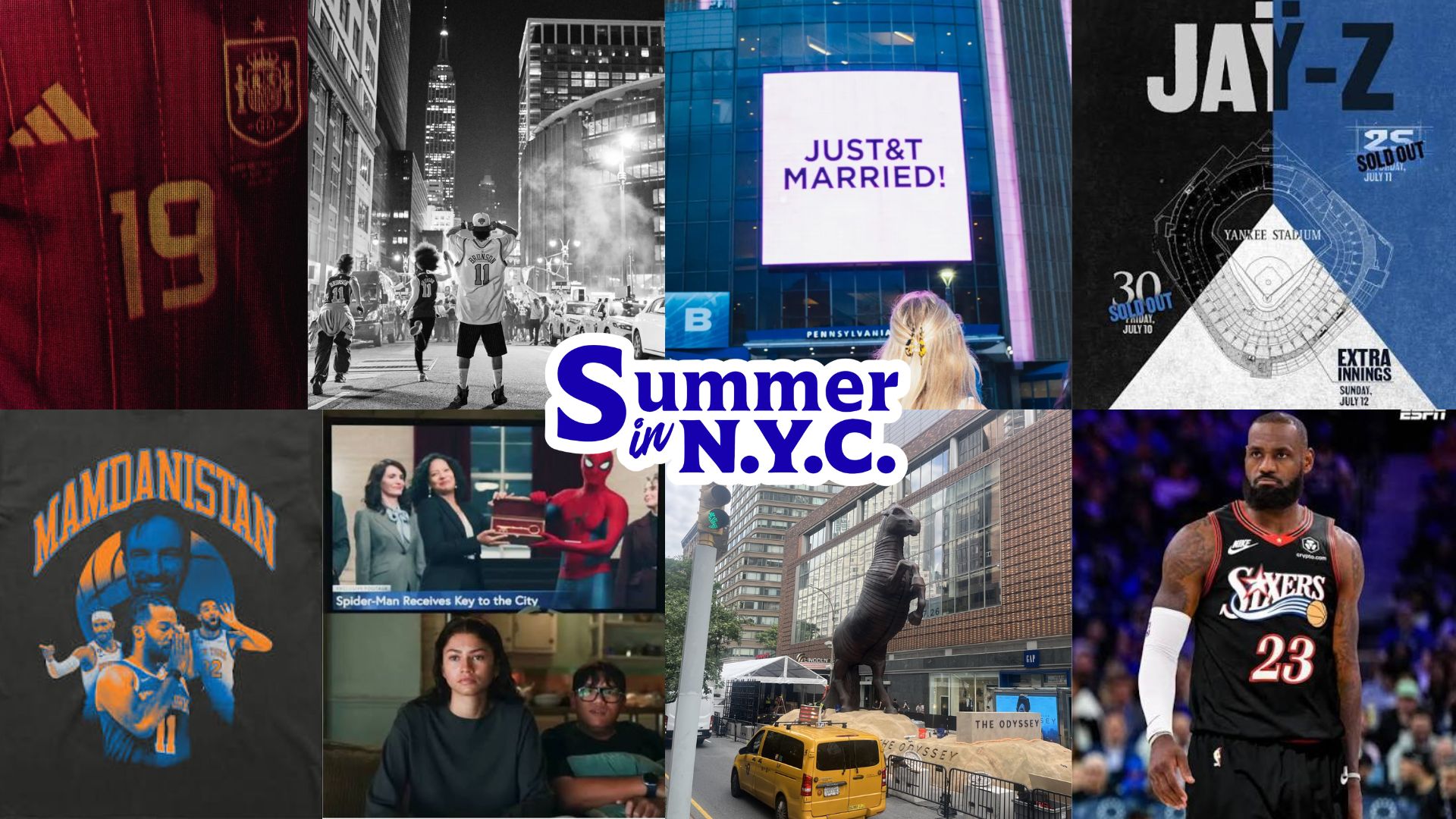
The Knicks won an NBA Championship for the first time in 53 years, and Spain won a World Cup, turning Lamine Yamal into a household name. The real winners, however, were prediction markets.
As the world rallied around sports, prediction markets found ways to attach themselves to culture in very visible ways and make a little money doing it. Kalshi and Polymarket, leading prediction markets, made a splash by running ads and inserting themselves into cultural moments.
Why it matters
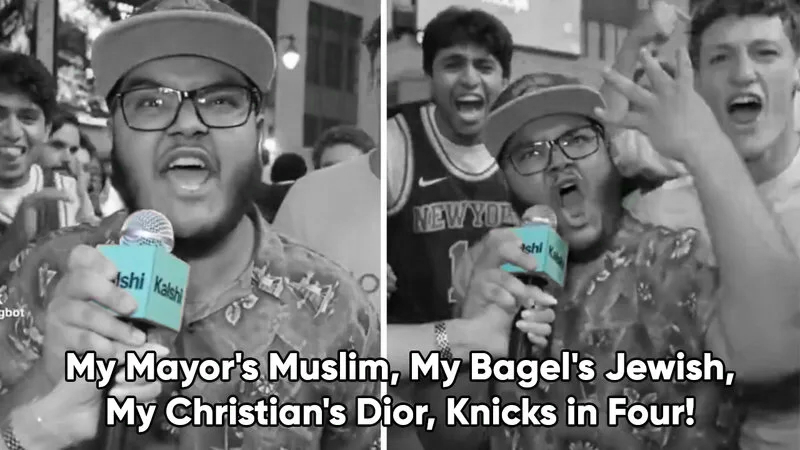
During the Knicks' NBA Championship run, the rallying cry heard around the world, led by 23-year-old fan MD Ahnaf Hossain, went, "My Mayor's Muslim, My Bagel's Jewish, My Christian Dior, Knicks in Four." From the Kalshi-branded mic to God's ears, this video wasn't sponsored by Kalshi—it WAS Kalshi. It was posted on one of their owned accounts before ending up on t-shirts, hats, and Instagram stories everywhere, garnering 7.7 million views and 1.3 million likes on TikTok, alongside millions more in reposts across other platforms.
Polymarket was also in the streets, sponsoring live streamer Jake Epstein as he stood outside Madison Square Garden to say "Jalen Brunson" 100,000 times. Epstein later hosted a Polymarket-sponsored Jalen Brunson lookalike contest where the winner, a 5-year-old boy, took home $5,000.
In the World Cup, Kalshi's star-studded ad platform ranked #1 in engagement, and they also secured on-field advertising. Originally priced at $150 million, Kalshi secured the spot for $20 million in collaboration with ADI PredictStreet, the official (underutilized) prediction market of the World Cup.
Polymarket's Rick Rubin-led ad was one of the most talked-about, capitalizing on FIFA's new hydration-break ads. As a little bonus, they also crossed $20 billion in revenue on World Cup-related trades.
Start em’ Young
Prediction markets' attempts to latch onto culture may be working to influence a new generation. So far this year, young adults aged 18-21, who are banned from most traditional gambling markets, have traded $5 billion on Kalshi so far this year.
Free money…?
I’ve personally followed the rise of casual gambling closely for the past few years. I remember some sports writers in college news telling me about the betting they started doing on sports, and then watching it explode from there. Since then, it's only gotten easier and more popular. During a Kentucky Derby watch party this summer, a woman in attendance wouldn't stop remarking to me that these platforms' introductory bonus-bet offers were "free money." She went on to lose the free money, and her own as well. It feels like over the past 5-6 years, I've watched betting (and predicting) ravage the lives and bank accounts of people I know—what makes it so interesting is how quickly it happened.
What I’ll Be Paying Attention To
You can predict the outcome of anything you think you know, like clinical trials, the names of Hurricanes in the Atlantic, or Love Island. The floodgates are open, and I'm not sure they can be closed. They've faced insider trading incidents, public backlash, and Looney Tunes-style market manipulation, yet they keep growing in popularity. While it seems like they're here to stay, public opinion seems to be swinging negative, and I'll be closely tracking sentiment, especially compared with traditional sports betting platforms and casinos.
.png)