


Please Do Not Touch the Artwork: How Children’s Books Let Us Be Uninhibited

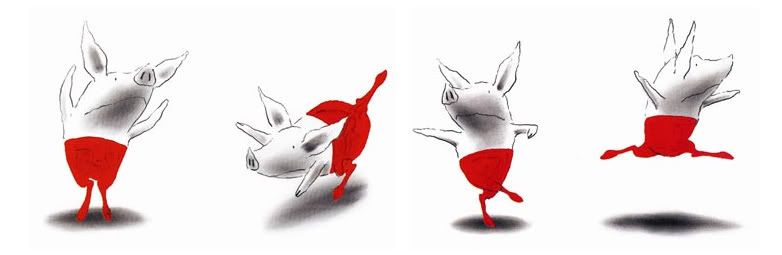
Olivia the Pig is chic because she was made In Ian Falconer's image.
Nan Marsh
·
October 16, 2026

When I sat down to find an idea for my biweekly piece, I kept circling back to children’s books. Maybe it’s the cooler weather outside, the fall sparking tinges of nostalgia as it predictably does every October, but I’m reminded of some of the characters I once knew like close friends: Strega Nona by Tommy DePaolo, Tar Beach by Faith Ringgold, Chrysanthemum by Kevin Henkes, Madeline by Ludwig Bemelmans. I’ll save the long list of books I love for my own personal nostalgia, but I’ve started to wonder: 

What makes a children’s book something you think about for the rest of your life?

And why are these all books that are still stuck in my head? Ian Falconer, the author and illustrator of Olivia, has helped me get a clue about why. Olivia’s protagonist is, obviously, named Olivia. She is a pig. She has a younger brother who annoys her and a cat she constantly has to pick up and move to the other room. The pages are, mostly, in black and white, with the occasional pop of color. She tries on red lipstick and debates which bathing suits to wear to the beach and is the exact type of character a younger-me would’ve wanted to emulate. And this character was inspired by Falconer’s niece, who apparently could “talk her way through anything if she had an objective in mind”. 

Falconer was pursued by a publisher at Simon & Schuster specifically for a children’s book, after already leading a successful career as an artist.

He’d designed 20 covers for the New Yorker Magazine. He collaborated, learned from, worked with, and fell in love with the British artist, David Hockney, and together, they designed the costume sets for  “The Nutcracker” at the Pacific Northwest Ballet. Hockney wrote a blurb for the back of Olivia, which reads:

“Olivia’s grasp of abstract composition is extraordinary for a 6-year old.”

This quote encapsulates the humor and genius of approaching the children’s book as some greater art form - a blend of uninhibited childlike wonder and an adult’s high-art aesthetic.

In the story, on a rainy day, Olivia and her mom go to an art museum together. This high-energy character, constantly fluttering around and talking back to her mom, unexpectedly is frozen by the painting, Swaying Dancer (Dancer in Green) by Edgar Degas. Falconer knew that getting lost in a piece of art could happen to anyone. For a child, it comes without any sort of preciousness. 

Falconer captured the childlike wonder of being moved by a piece of artwork before we even had the words.

After getting home from their trip, Olivia recreates a Jackson Pollock on their living room wall by splattering paint against it, remarking on just how easy it could be. Good picture books are like walking through a museum, but you’re able to touch the artwork.

From Ludwig Bemelmans to Faith Ringgold, the books that become ingrained in our memories weren’t stating lessons tailored for children: they were created by artists who took their audience seriously.

Children know the story simply by looking and feeling. It’s a lot harder to overthink something if you don’t know how to read.


Please Do Not Touch the Artwork: How Children’s Books Let Us Be Uninhibited

Nan Marsh
·
October 18, 2026

Olivia the Pig is chic because she was made In Ian Falconer's image.

When I sat down to find an idea for my biweekly piece, I kept circling back to children’s books. Maybe it’s the cooler weather outside, the fall sparking tinges of nostalgia as it predictably does every October, but I’m reminded of some of the characters I once knew like close friends: Strega Nona by Tommy DePaolo, Tar Beach by Faith Ringgold, Chrysanthemum by Kevin Henkes, Madeline by Ludwig Bemelmans. I’ll save the long list of books I love for my own personal nostalgia, but I’ve started to wonder: 

What makes a children’s book something you think about for the rest of your life?

And why are these all books that are still stuck in my head? Ian Falconer, the author and illustrator of Olivia, has helped me get a clue about why. Olivia’s protagonist is, obviously, named Olivia. She is a pig. She has a younger brother who annoys her and a cat she constantly has to pick up and move to the other room. The pages are, mostly, in black and white, with the occasional pop of color. She tries on red lipstick and debates which bathing suits to wear to the beach and is the exact type of character a younger-me would’ve wanted to emulate. And this character was inspired by Falconer’s niece, who apparently could “talk her way through anything if she had an objective in mind”. 

Falconer was pursued by a publisher at Simon & Schuster specifically for a children’s book, after already leading a successful career as an artist.

He’d designed 20 covers for the New Yorker Magazine. He collaborated, learned from, worked with, and fell in love with the British artist, David Hockney, and together, they designed the costume sets for  “The Nutcracker” at the Pacific Northwest Ballet. Hockney wrote a blurb for the back of Olivia, which reads:

“Olivia’s grasp of abstract composition is extraordinary for a 6-year old.”

This quote encapsulates the humor and genius of approaching the children’s book as some greater art form - a blend of uninhibited childlike wonder and an adult’s high-art aesthetic.

In the story, on a rainy day, Olivia and her mom go to an art museum together. This high-energy character, constantly fluttering around and talking back to her mom, unexpectedly is frozen by the painting, Swaying Dancer (Dancer in Green) by Edgar Degas. Falconer knew that getting lost in a piece of art could happen to anyone. For a child, it comes without any sort of preciousness. 

Falconer captured the childlike wonder of being moved by a piece of artwork before we even had the words.

After getting home from their trip, Olivia recreates a Jackson Pollock on their living room wall by splattering paint against it, remarking on just how easy it could be. Good picture books are like walking through a museum, but you’re able to touch the artwork.

From Ludwig Bemelmans to Faith Ringgold, the books that become ingrained in our memories weren’t stating lessons tailored for children: they were created by artists who took their audience seriously.

Children know the story simply by looking and feeling. It’s a lot harder to overthink something if you don’t know how to read.

See More by

Nan Marsh

→